
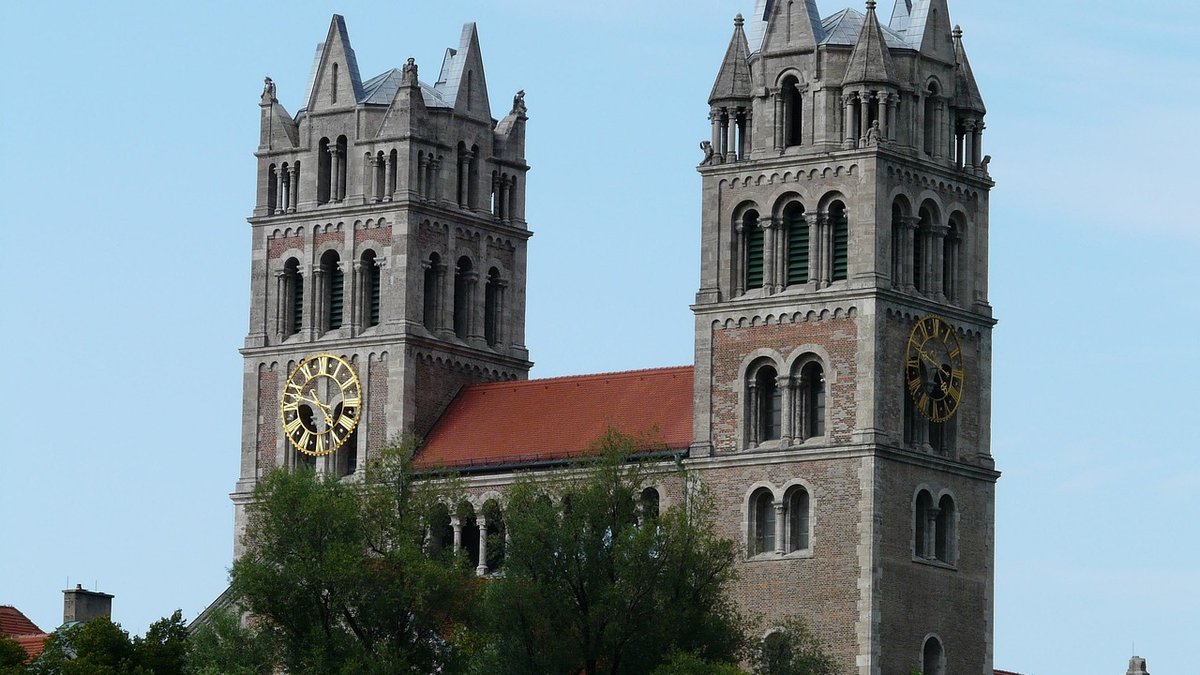
The Gothic Revival is often treated as a single Victorian enthusiasm, but it arrived in two quite different waves. The first, running from about the 1740s to the 1820s, was playful and ornamental. Horace Walpole’s Strawberry Hill in Twickenham, with its paper-thin battlements and fan-vaulted gallery, is the classic case: pointed arches used as decoration, applied to a classical shell like icing on a cake. Contemporaries called it "Gothick", and they knew it was a bit of a game.
The second wave, from the 1830s onwards, was anything but. Augustus Welby Northmore Pugin’s Contrasts (1836) argued that Gothic was not simply prettier than classical architecture but morally superior — the honest expression of a Christian society. That argument gave the movement its engine, and it reshaped churches, town halls, schools and country houses across Britain.
Three pressures converged. First, sheer numbers: the industrial cities needed hundreds of new churches, and the Church Building Act of 1818 funded them, mostly as cheap preaching boxes. Second, reform: the Oxford Movement within the Church of England sought to recover the ceremonial and the buildings of the pre-Reformation church. Third, identity: a nation flexing its imperial muscles wanted an architecture that felt native rather than imported from Greece or Rome. Gothic, whatever its French origins, had been thoroughly naturalised here since the twelfth century.
Add cheap railway transport, which carried both architects and pattern books the length of the country, and a rising middle class eager to commission, and you have the conditions for a fifty-year building boom.
Once you know what to look for, these buildings become wonderfully legible. Keep an eye out for:
Charles Barry and Pugin’s Houses of Parliament, begun in 1836 after the old palace burned, set the national template: Perpendicular Gothic applied to a vast modern legislature. Pugin’s own churches, and especially St Chad’s Cathedral in Birmingham, crammed with colour and detail, showed what the style could do on a modest budget.
George Gilbert Scott became the busiest architect in the country — the Midland Grand Hotel at St Pancras, the Albert Memorial, and dozens of churches, schools and workhouses besides. Butterfield’s All Saints, Margaret Street in London, ruthlessly striped in brick and stone, divided opinion then and still does. John Loughborough Pearson built Truro Cathedral, the first new Anglican cathedral foundation in England since the Reformation, while Alfred Waterhouse’s Natural History Museum in South Kensington proved the style could house science as convincingly as faith. Later, the quieter work of G. F. Bodley and Ninian Comper brought an almost jewel-like refinement to church interiors.
The style did not stay in the chancel. Town halls in Manchester, Halifax and Birmingham announced municipal confidence in Gothic dress, with towers that echoed a cathedral close. Grammar schools, libraries, hospitals, almshouses and railway stations followed. In the countryside, country houses turned to the Tudor and Jacobean past: gables, mullioned windows, tall chimneys and a deliberate air of continuity. North of the border the equivalent was Scottish Baronial, with crow-stepped gables and corner turrets, popularised by the rebuilding of Balmoral in the 1850s.
Start at the main entrance and work upwards. Ask what the building is trying to say, and to whom — a parish church, a bank and a railway hotel all speak slightly different dialects of the same language.
Above all, give yourself time. The Gothic Revival rewards slow looking — the closer you get, the more there is to see.

Hi, my name is Anthony kuber. I am artist and fashion designer.
I love to travel and writing blogging.
Your email address will not be published. Required fields are marked *
Software Developer & Writer
Hey, I'm Diva, a developer and writer blending code and creativity. I'm driven by a deep curiosity and a relentless pursuit of excellence. Join me as I craft digital solutions and captivating stories.


