
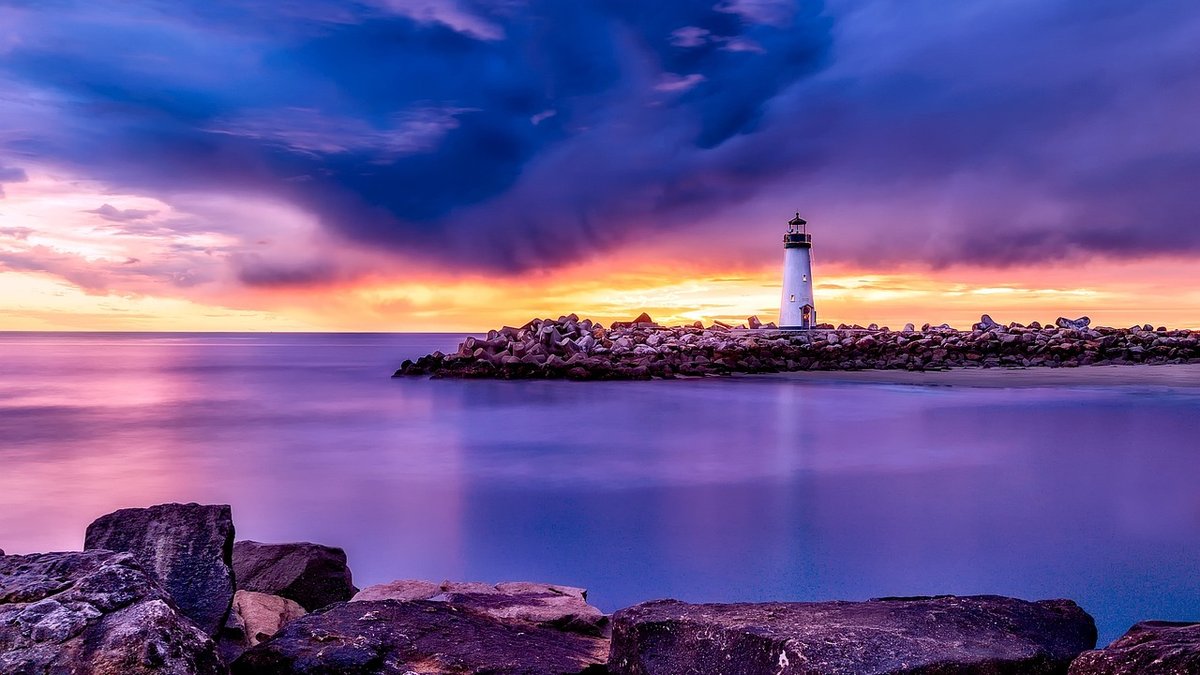
For roughly two centuries, the British coastline was kept alight by people who lived by the clock. Lighthouse keeping was never a single job so much as a rota of small, exacting tasks repeated night after night, in weather that often made the simplest errand difficult. A keeper was expected to be a lamplighter, a mechanic, a weather observer and, at the rock stations, a passable cook and sailor. Pay was modest, the accommodation was tied to the post, and the satisfaction came from a light that burned exactly as it should, every hour of every night.
Understanding that routine is the best way to read the buildings that survive. The tower, the store, the oil cellar and the keeper's cottage were all shaped by the demands of the work rather than by any architectural fashion.
Early British lights burned candles or open oil lamps behind metal reflectors, and the keeper's night was a battle against soot, draughts and guttering flames. The arrival of the Argand burner, then the segmented lens invented by Augustin-Jean Fresnel in the 1820s, transformed the brightness of a light — but not the labour required to sustain it. A rotating optic had to be turned by a clockwork mechanism driving a falling weight, which meant a trip up the tower to wind the drum, often every few hours.
The nightly round at a typical station looked something like this:
Cleanliness mattered more than strength. A smear of oil on a lens prism, or a fingermark on the inner face of the glazing, could scatter the beam and weaken it at sea. Keepers polished the optic with soft cloths and, in some towers, a little alcohol, and they painted the ironwork in white and red ochre to keep rust at bay.
Every station kept a log, and those volumes are now among the most valuable records of British coastal life. Keepers recorded wind direction and force, sea state, visibility, barometric pressure and temperature, usually hourly and without interruption. Because the entries were made in the same format at the same hours for decades, they form a long, consistent run of observations that meteorologists still consult.
The same pages hold the human story. A keeper might note a collier standing too close inshore, a fishing boat running for shelter, a distress rocket seen at dusk, or the launch of the lifeboat. Fog was the particular enemy: when visibility closed in, the light was useless and the fog signal took over. Explosive signals, sirens and later diaphone horns all needed watching, fuelling and sometimes hand-cranking, and a keeper could be driven from his bed at any hour to answer a passing vessel's signal with a rocket or a whistle blast.
Life ashore and life on a rock were very different propositions. At a mainland station, a keeper might have a garden, a pig, a few hens and a family in the cottage, with children walking or rowing to school. On a wave-swept rock such as the Eddystone or the Skerryvore, there was no soil, no well and no escape in bad weather. Three keepers would share close quarters on a rota, and relief could be delayed for weeks.
Water was collected from roofs into cisterns or shipped out in casks; stores arrived by boat when the sea allowed. Fresh vegetables were a luxury, and keepers became skilled at stretching salted meat and ship's biscuit into something edible. The company of two colleagues, the radio, and letters delivered with the relief boat were the whole of a keeper's society. Small disputes could fester; most stations managed it through strict routines, separate duties and an unwritten rule that nobody talked politics at supper.
The twentieth century gradually removed the keeper from the tower. Acetylene and electric lamps no longer needed constant attention. Clockwork gave way to electric motors, and later to sealed rotating mechanisms that ran for years. Automatic lamp changers, remote monitoring and finally solar-powered equipment made a resident staff unnecessary, and the last keepers left their stations in the 1990s.
Automation did not mean the work vanished. Someone still has to service the optic, repaint the ironwork, maintain the fog detectors and respond when an alarm sounds — it is simply done by visiting technicians rather than by families living on the spot.
What remains is a remarkably complete heritage. Keeper's cottages, walled gardens, oil stores, cisterns and the worn stone steps of the tower all tell the story, and several stations open their doors to visitors. When you next stand in a lantern room, look for the small details: the blackened marks where wicks were trimmed, the rack of a clockwork weight, the hooks where a lamp was hung, the names and dates scratched into a window frame. They are the quiet signatures of people who spent their lives keeping a light burning, and they are as much a part of British architecture as any abbey or castle.

Hi, my name is Anthony kuber. I am artist and fashion designer.
I love to travel and writing blogging.
Your email address will not be published. Required fields are marked *
Software Developer & Writer
Hey, I'm Diva, a developer and writer blending code and creativity. I'm driven by a deep curiosity and a relentless pursuit of excellence. Join me as I craft digital solutions and captivating stories.


