
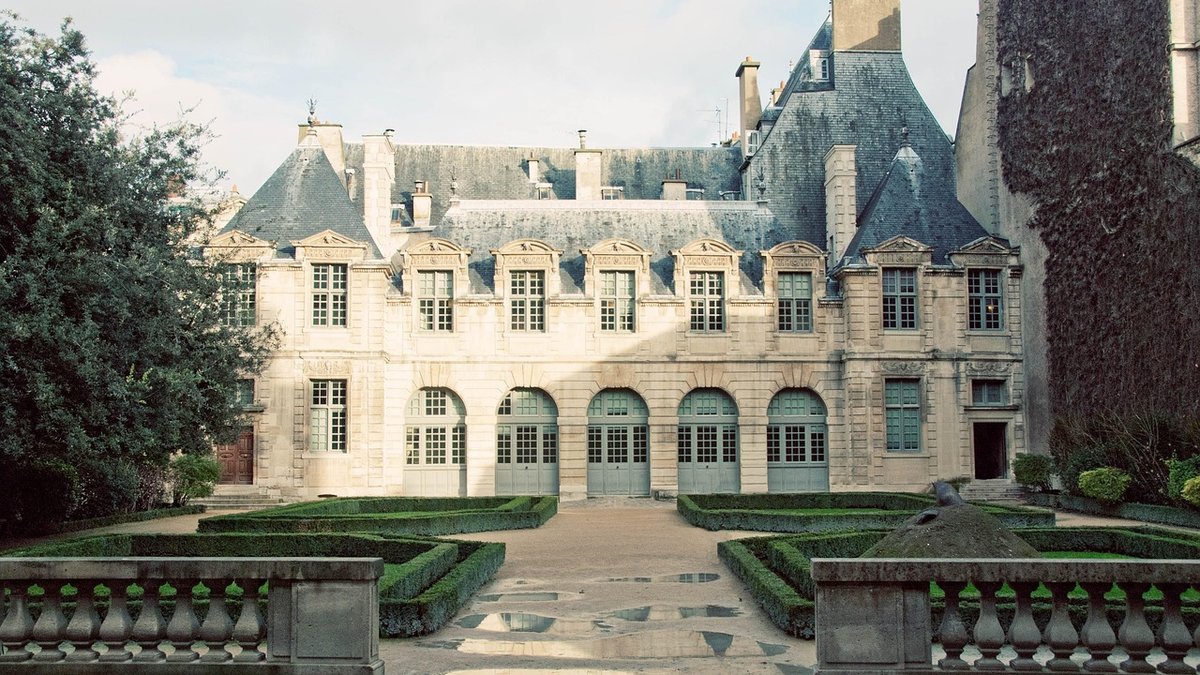
A stately home was never meant to stand alone. Its principal front was built to be seen, and the view from it was built to be looked at. The deer park, the avenue, the ha-ha and the ornamental lake are not incidental extras added later; they are the designed landscape that gave the house its meaning, projecting the owner's wealth, taste and command over the surrounding country. Arriving at such a place is a staged experience. It begins miles out, at the park pale or the lodge gates, and unfolds in a sequence the designer planned for you — a glimpse of the house across water, a long straight drive, then the sudden reveal as you turn into the forecourt.
Understanding that framework turns a pleasant stroll into something far more rewarding. You begin to read the land as it was meant to be read.
The oldest layer of most parkland is the medieval deer park. These were enclosed with a bank and ditch topped by a paling fence — the park pale — and they signalled wealth twice over: the owner held the right to hunt and the right to keep deer, usually fallow but sometimes red. Venison on the table and a herd in the view were statements about rank.
In the eighteenth century, many parks were remodelled in a process known as emparking. Villages were moved, arable fields turned down to pasture, and the deer often kept on as scenery rather than quarry. The signs are still legible if you know where to look: a boundary bank and ditch running through woodland, veteran oaks with broad, spreading crowns that grew up in open ground, and the faint corrugation of ridge and furrow beneath the turf, which is the ghost of ploughland erased to make pasture.
Formal avenues reached their height in the seventeenth century: long, straight processional lines of oak, elm or lime, sometimes doubled or tripled, aimed precisely at the house. Where the avenue could not run all the way, it ended on an obelisk, an urn or a distant folly, closing the view with something worth walking towards. The avenue was also a measuring device, making distance legible, and it framed the house long before you reached the door.
The elm avenue is now rare — Dutch elm disease removed so many in the twentieth century, and the storms of 1987 and 1990 finished off others. Lime and oak have often replaced them. A good trick is to stand in the centre of an avenue and look along the line; you are standing exactly where the designer wanted the eye to travel. Then check the wood. If the same alignment continues as a ride through the trees, the line was planned to run far beyond what you can see.
The ha-ha is the most elegant piece of practical trickery in the British landscape. It is a sunken ditch with a vertical retaining wall on the garden side, so that livestock and deer are stopped without any fence or hedge interrupting the sweep of grass. The name comes from the exclamation of surprise at discovering it. It allowed the park to read as though it flowed straight into the pleasure grounds, one continuous view.
Charles Bridgeman and John Vanbrugh used the device in the early eighteenth century, William Kent popularised it, and Lancelot "Capability" Brown relied on it constantly. To find one, look for an unexplained dip in levels; the retaining wall, in brick or stone, may be masked by turf. Practical caution: there is no barrier, so mind your footing. Farmers, whose cattle have learned the same lesson, may still regard it with mixed feelings.
Water was the costliest improvement and the most transformative. Early schemes were formal: straight canals laid symmetrically beside the house, holding a mirror to the façade. Later designers made naturalistic lakes by damming a stream and flooding a valley, sometimes submerging field systems and meadow boundaries in the process.
Brown's genius lay in burying the edges of his lakes behind tongues of land so the water appeared endless. A lake, though, is a piece of engineering: a dam, an overflow, a sluice and a constant fight against silting and leaks. Look for the dam, the weir and the cascade, and for a boathouse or bridge that reveals where the intended viewpoints lay. The best ones keep their power to stop you mid-step.
Start at the house, on the principal front, and ask what the view was designed to do. Then work outwards with these questions in mind:
A designed landscape is a living document, edited by every generation that owned it and now by the weather, the deer and the visitor. Walk it with that in mind, and the setting stops being a backdrop and becomes the story.

Hi, my name is Anthony kuber. I am artist and fashion designer.
I love to travel and writing blogging.
Your email address will not be published. Required fields are marked *
Software Developer & Writer
Hey, I'm Diva, a developer and writer blending code and creativity. I'm driven by a deep curiosity and a relentless pursuit of excellence. Join me as I craft digital solutions and captivating stories.


